Long-eared Owls behind the numbers
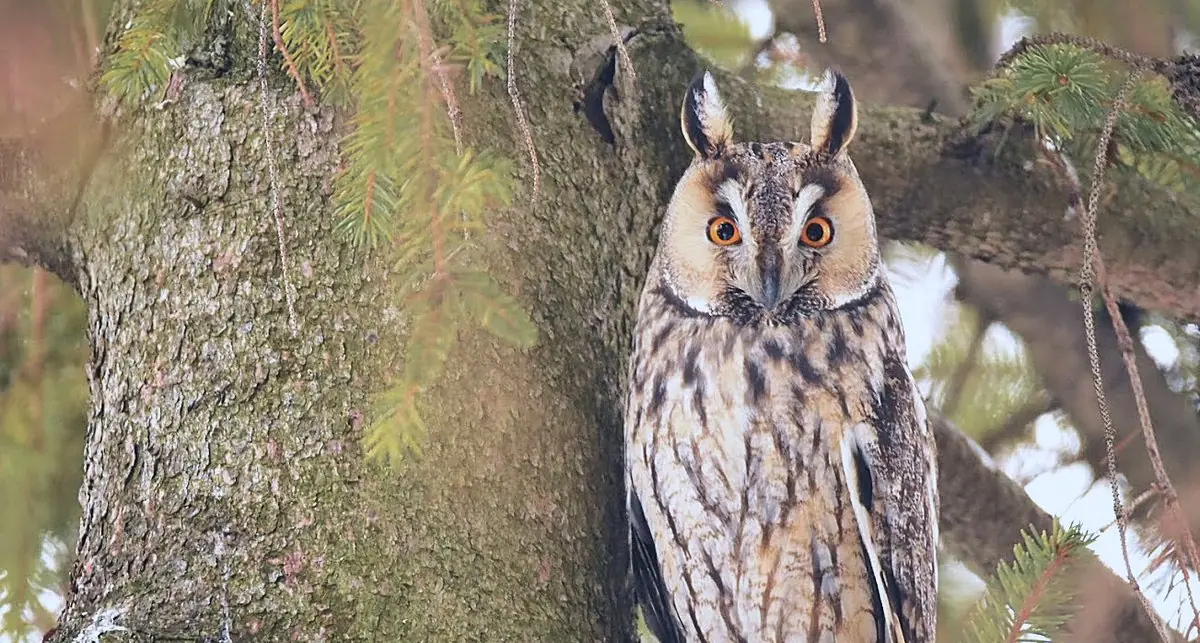
At the end of January in 2026, a survey regarding the wintering sites of the Long-eared Owl (Asio otus) was carried out in the Heves-plain again. A minimum of 709 individuals were identified at 24 sites across 19 municipalities, representing an outstanding number compared to previous years.
In the southern part of Heves, the sight of Long-eared Owls (Asio otus) seeking shelter from the winter is not uncommon within the urban areas. Their distinctive feathered ears and orange eyes make them easily recognizable even to the less experienced observer. The Hungarian Ornithological and Nature Conservation Society is building on this by asking for the public's help to conduct a national survey of this interesting owl species between January 23rd and 26th, 2026.
About the rodent control service of the owls
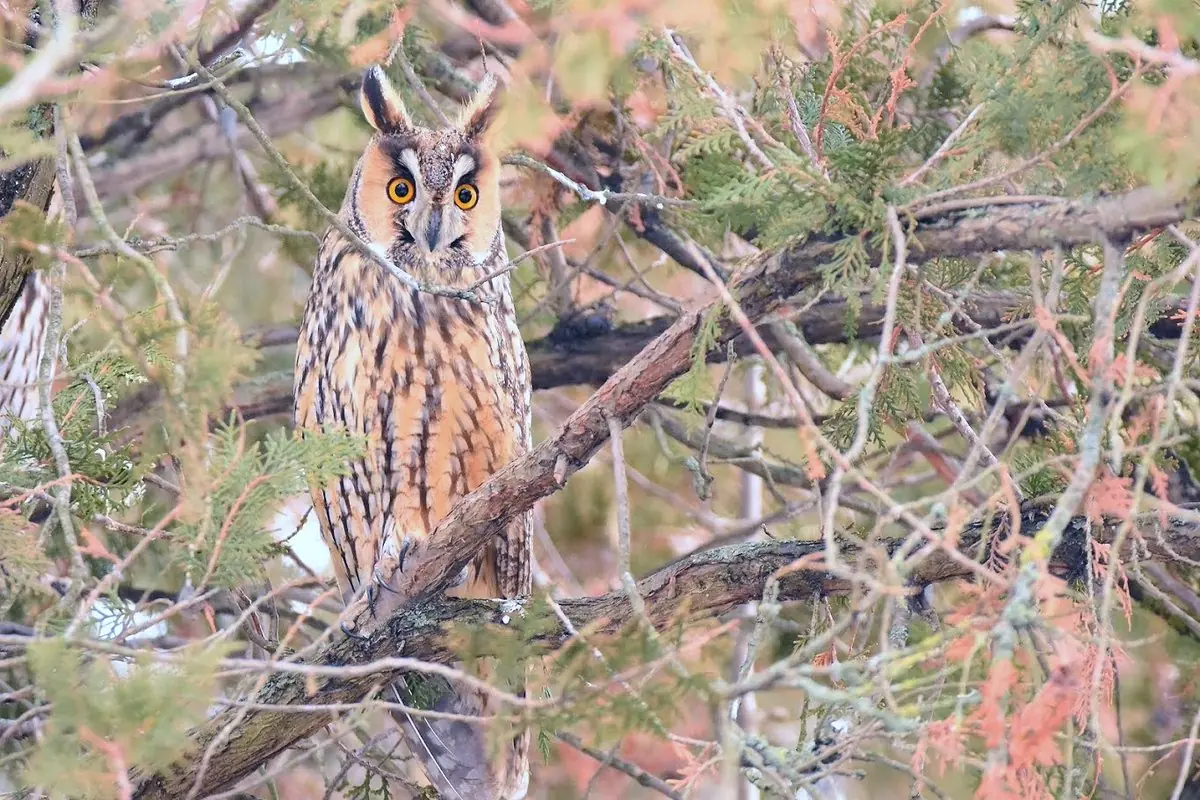
The Long-eared Owl does a great service in the fight against voles and mice. The species has an average daily capacity of 2.5 mice or voles per day. If the average weight of a common vole is approximately 25 g, then over a winter period of more than 3 months - 100 days for simplicity - a Long-eared Owl can consume roughly 6.25 kg of small rodents over the period considered. If you multiply this by the number of individuals wintering here, you get a considerable amount, all for free.
On this occasion, the members of our Association counted the number of Long-eared Owls in the southern municipalities of the county, at the known daytime roosting sites, as in previous years.
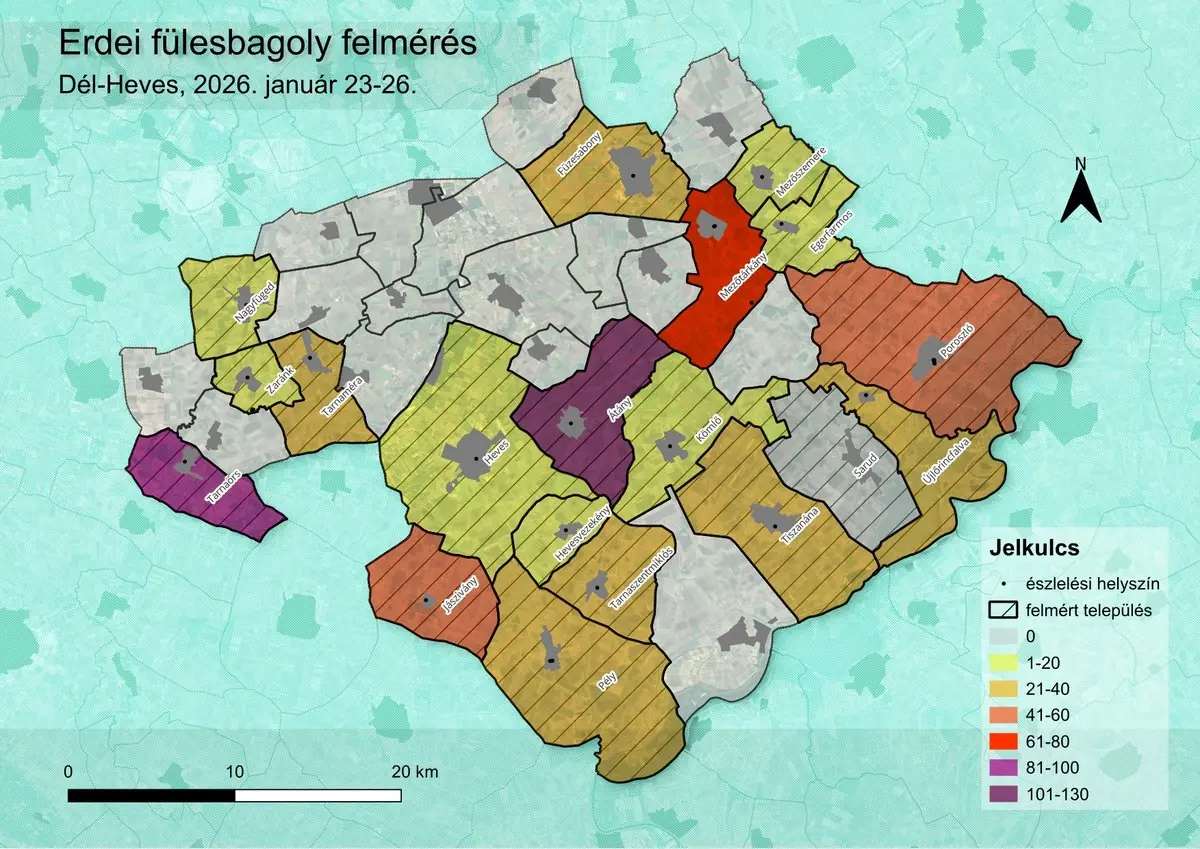
In 2026, we found individuals at 24 sitest across 19 municipality. We recorded a minimum of 709 individuals, which is definitely an increase compared to previous years. This is probably due to the gradation of the voles, which has been going on for several years, and to the more wintry weather than usual.
| Municipality | Minimum number of individuals |
|---|---|
| Átány | 127 |
| Egerfarmoss | 13 |
| Füzesabony | 30 |
| Heves | 20 |
| Hevesvezekény | 20 |
| Jászivány | 43 |
| Kömlő | 15 |
| Mezőszemere | 13 |
| Mezőtárkány | 79 |
| Nagyfüged | 15 |
| Poroszló | 46 |
| Pély | 40 |
| Sarud | 0 |
| Tarnaméra | 40 |
| Tarnaszentmiklós | 28 |
| Tarnaörs | 100 |
| Tiszanána | 37 |
| Újlőrincfalva | 23 |
| Zaránk | 20 |
| Total minimum | 709 |
In addition to the Long-eared Owl, 1 or 1 specimen of the much rarer relative, the Short-eared Owl (Asio flammeus), was also found in two villages. This species is very similar to its relative, but is not common in urban habitats and is generally rare or scattered in our country.
Comparison of Hungary's two "eared owl" species
At first glance, the two species are very similar, but the Long-eared Owl has large feather ears and orange eyes, while the Short-eared Owl has small feather ears and bright lemon yellow eyes. Its eyes have a wide black field around the outer part of the face veil, which makes its gaze seems to be much more decided.
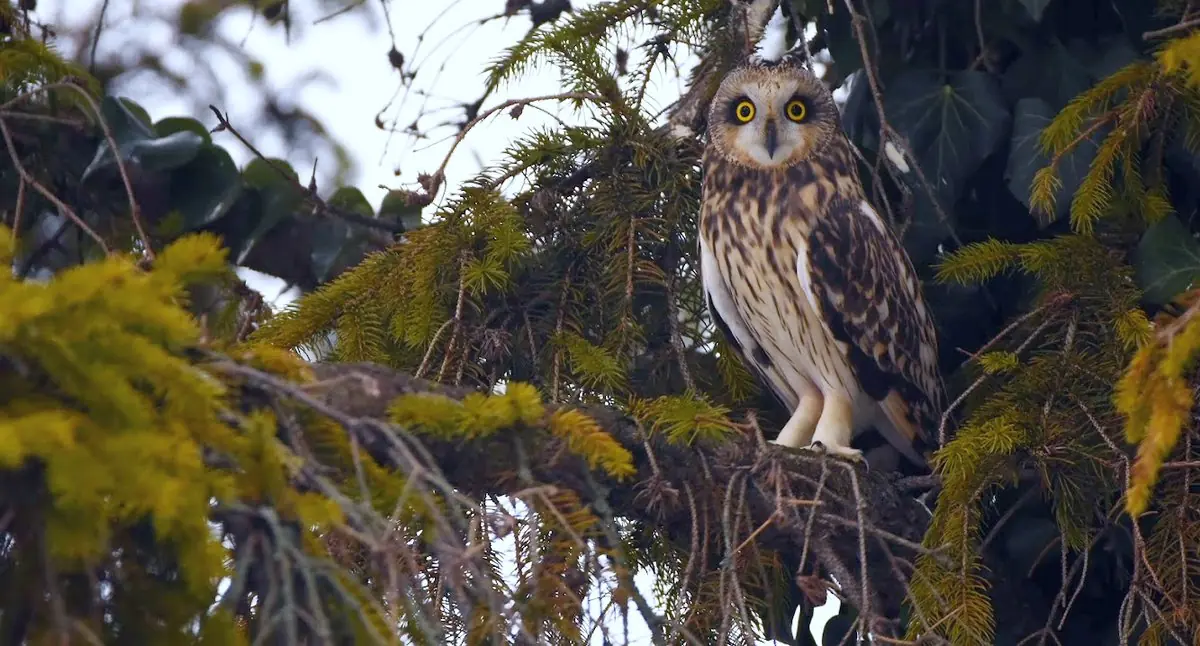
They also have similar food and feeding habits, but have different habitat requirements. The Long-eared Owl prefers open habitats with trees and shrubs, while its relative prefers lowland, treeless habitats. The latter is a relatively rare, occasional breeder in our area.
Their nesting habits are also differ. Like most of other owl species, the Long-Eared Owl does not build nests, mostly inhabiting the twig nests of crows. It doesn't avoid artificial nest boxes or the nests of smaller or larger birds. So much so that it sometimes even occupies the nests of white storks.
In contrast, the Short-eared Owl is not a "nest-occupant", building its nest on the ground from grass and other plant parts. This is interesting, as it is the only one of the 10 owl species that breed in our area that builds a nest.
The chicks of both species are semi-fledgling. Therefore, in the spring and summer (and even at the end of winter), do not be surprised to find a fluffy owlet that is flightless or unsteady. In most cases, this is perfectly normal. The best thing to do is to leave it in a safe place and not to take it away from where you found it!
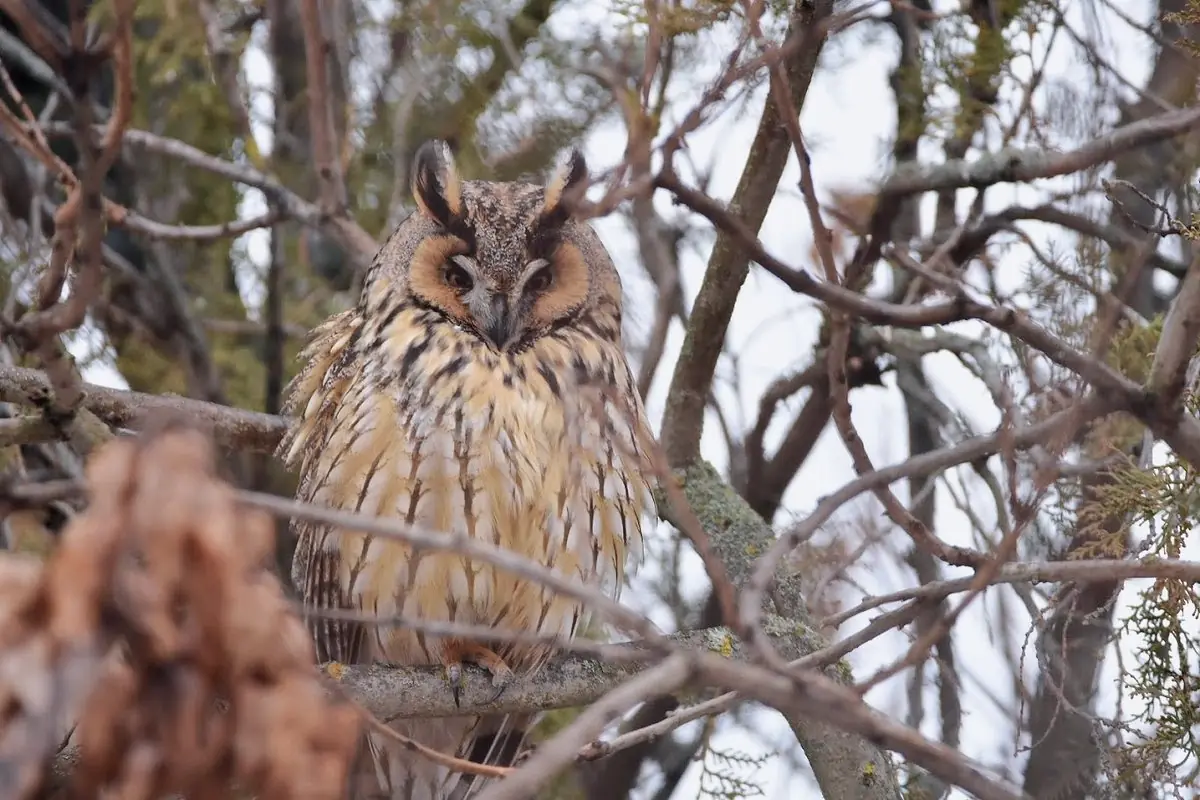
If we can tolerate their useful service in the face of owl pellets (pellet: the indigestible remains of food eaten, in the form of small scoops), we should try to provide the best possible conditions for their safe wintering. Since they cannot be specifically introduced into trees suitable for daytime roosting (mostly evergreen tree crowns), protecting the established sites they often use can go a long way to ensuring the species' continued presence, settlement and conservation. By protecting their roosting sites, we can also help the long-term conservation of the species. If you know trees or shrubs that are used as resting sites, let's draw others' attention to their importance and conservation.