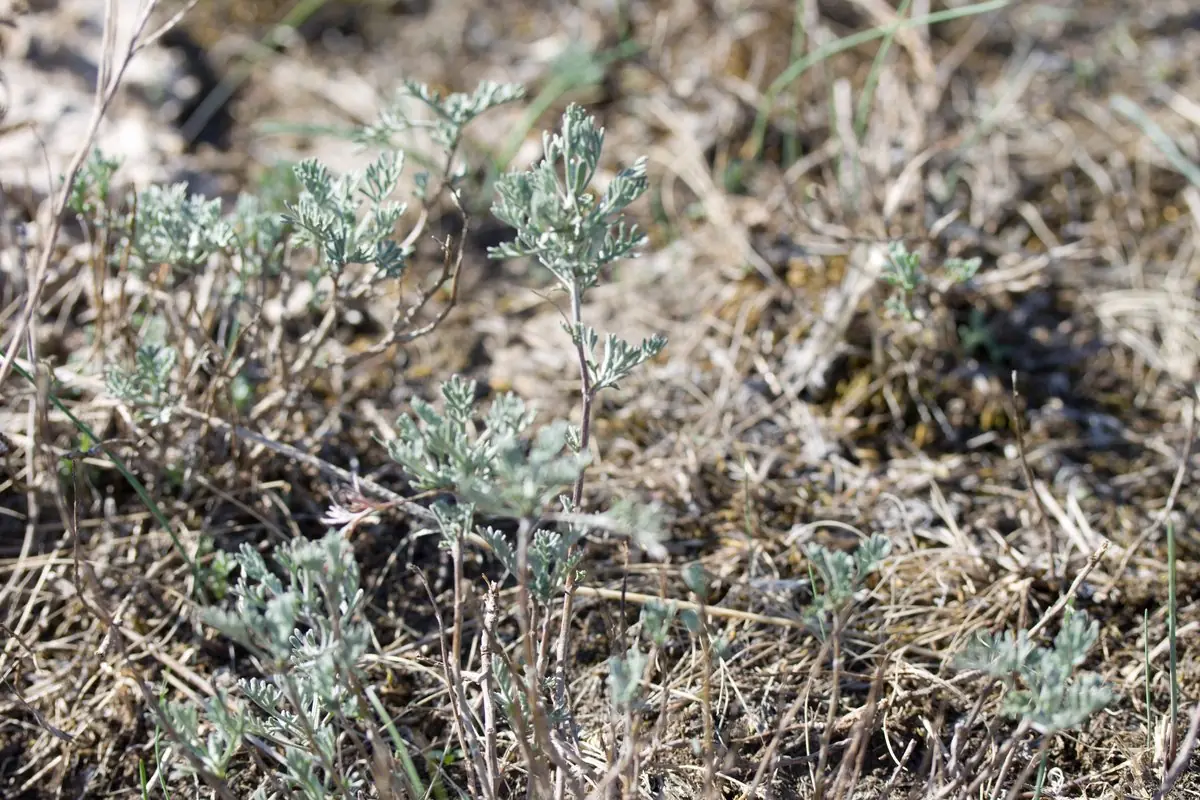
Our eponymous, the saline wormwood
We can often become attached to simple things that have no meaning for others. And if we look closely, behind the simplicity and modesty of these things, some values and specialities eventually attract the attention of those around us.
It's the heat of summer. Thanks to the drought, the countryside is already yellow and burnt everywhere. At noon, grazing animals are desperate for shade. On the shady side of one bale, we see a hare. Beside the next bale, a fox. In no mood to chase, they pant and conserve their body's water reserves. As I move on from the cut alfalfa patch, I come to a lawn. The dry grass crunches beneath me, locusts scatter in my wake. Everything is dry, dusty, and there is no sign of water. The dry grass grows shorter before my feet. In places, the barren ground is already showing. And here I catch a glimpse of an ashen green plant, in some places completely overgrown. I wade through the grey-green carpet and take a deep breath. It is a characteristic scent that I only smell when I am in the wilderness. I've just arrived home.
I've been walking the wilderness for over thirty years now. Sometimes I search for nests, sometimes I watch dragonflies on the water's edge, but often I sit down somewhere, listen to the drama and the love ripples around me and breathe in the scent of the wilderness.
The scent of wormwood is so distinctive that it defines the air, despite many other fragrant plants. And you can't get tired of it, even after 30 years.
The reader who has made it this far is right to ask, where is the curiosity here? We will try to continue our article and introduce our eponymous as soon as possible.