The Magic of South-Heves
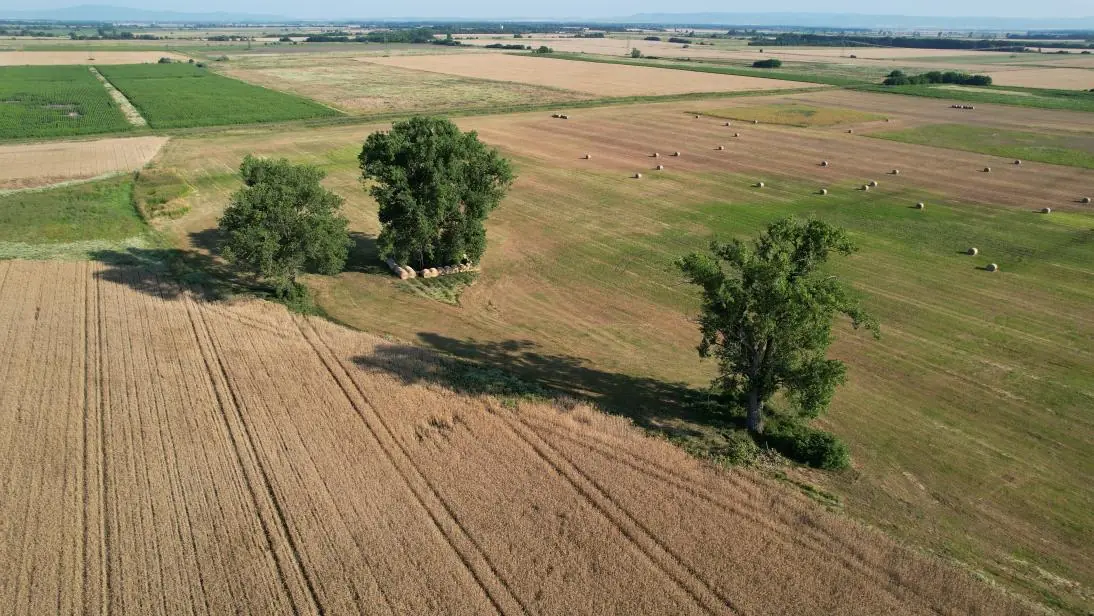
Southern Heves is like a mosaic. Most of the picture is made up of monochrome patches of farmland, but its real value lies in the many tiny, shimmering fragments - the patches of salt marsh, bogs and clumps of trees - without which the "shapes" of red-footed falcons and rollers would disappear from the picture.
What are the most distinctive habitat types in the southern part of Heves County, and what special flora and fauna are they home to?
Habitats
Grasslands
As part of the Tápió-Sajó alluvial plain and the Tisza valley vegetation landscapes (formerly divided into the Tiszántúli flora, i.e. Crisicum), the habitats of semi-natural habitats are clearly dominated by short grass grassy meadows and, to a lesser extent, loess grasslands. The value of salt grasslands lies in their mosaic character. The micro-canopy has a strong influence on the salt concentration, so that a difference of a few centimeters in level can lead to completely different plant communities. Thus, the presence of seeps and blind spots in the rocky outcrops allows a wide variety of flora and fauna to develop in relatively small areas. Some of the best examples of this can be seen in the grasslands between Pély and Jászivány and in the Ludas near Tarnaszentmiklós. The loess grasslands have now almost disappeared, and only fragments of them remain. They can be found mainly in fields, on embankments and in the area of the Nagy-Hanyi bush in Dormánd. They have developed on valuable loess soils, most of which have now been converted to arable land.
Wetlands
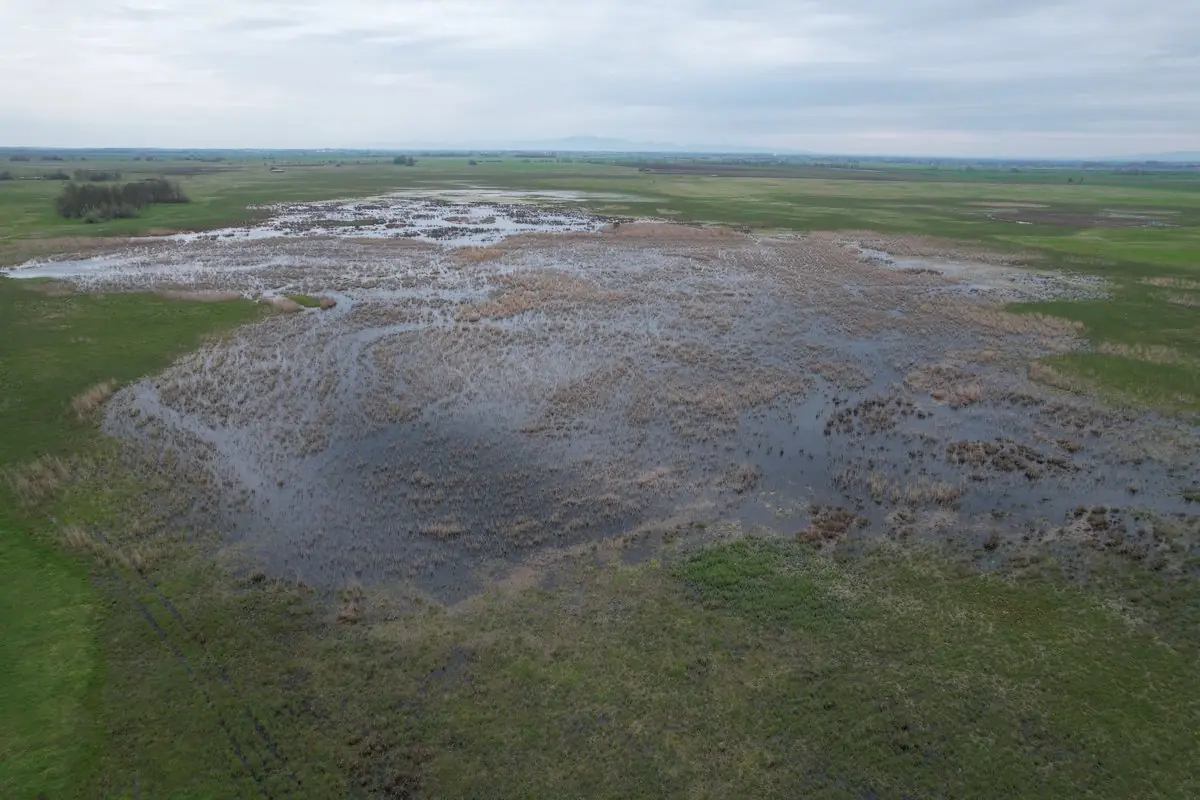
Before river regulation, 20% of the area was dominated by water; today, these habitats are highly fragmented. A network of intermittent water levels, salt marshes and swamps, and meandering meanders characterise the lower-lying areas. Periodic (mainly spring) patches of water (inland waters, marshes) in fields and grasslands provide breeding sites for migratory shorebirds, while larger patches of water, which may persist until early to mid-summer, may also provide nesting sites for some species.
Wooded habitats
The forest cover of the area is very low, around 2%, and natural forests have almost disappeared. It is mainly composed of planted field shelter belts (white acacia, noble aspen, narrow-leaved silver fir) and small patches of native tree species (pedunculate oak, Hungarian ash). However, two forest areas should be highlighted. The alder woods around the source of the Hanyi stream next to Erdőtelek are a special feature of the landscape, while the Kerecsend forest, which isn't an integral part of the lowland landscape, represents a transition between lowland and hilly, mountainous forests.
Flora
Typical species are the clover species Trifolium angulatum, the Pannonian native Cirsium brachycephalum, a buttercup species that lives in salty grasslands, the Ranunculus lateriflorus and the salty marshlands' flagship plant, the lamb's lettuce (Camphorosma annua). Valuable species of loess are sage-leaf mullein (Phlomis tuberosa) and Slovak penny-cress (Thlaspi jankae). The edges of the marshes are covered with dwarf cattail with the bog-grass (Lindernia procumbens) or the endemic waterwort species Elatine hungarica. Interestingly, the planted oak woodlands are also home to upland orchids such as helleborines like Cephalanthera damasonium or Epipactis tallosii and ferns.
Animals
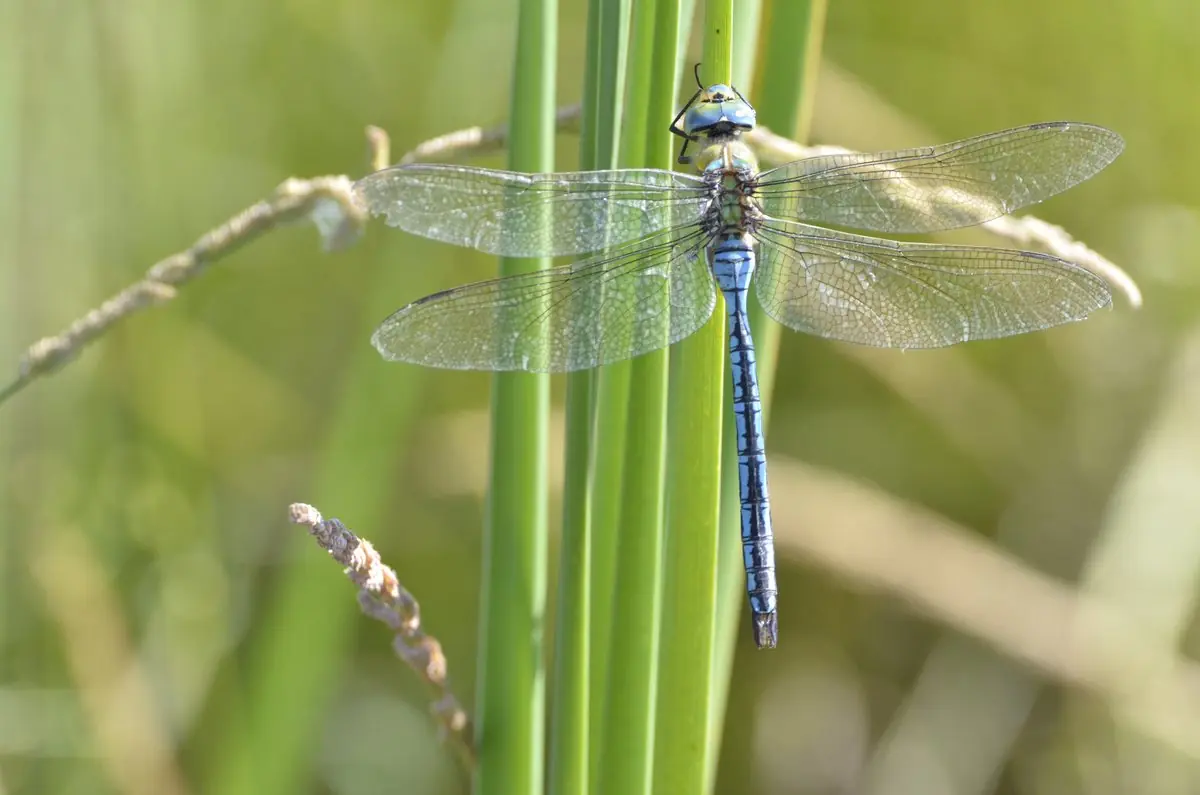
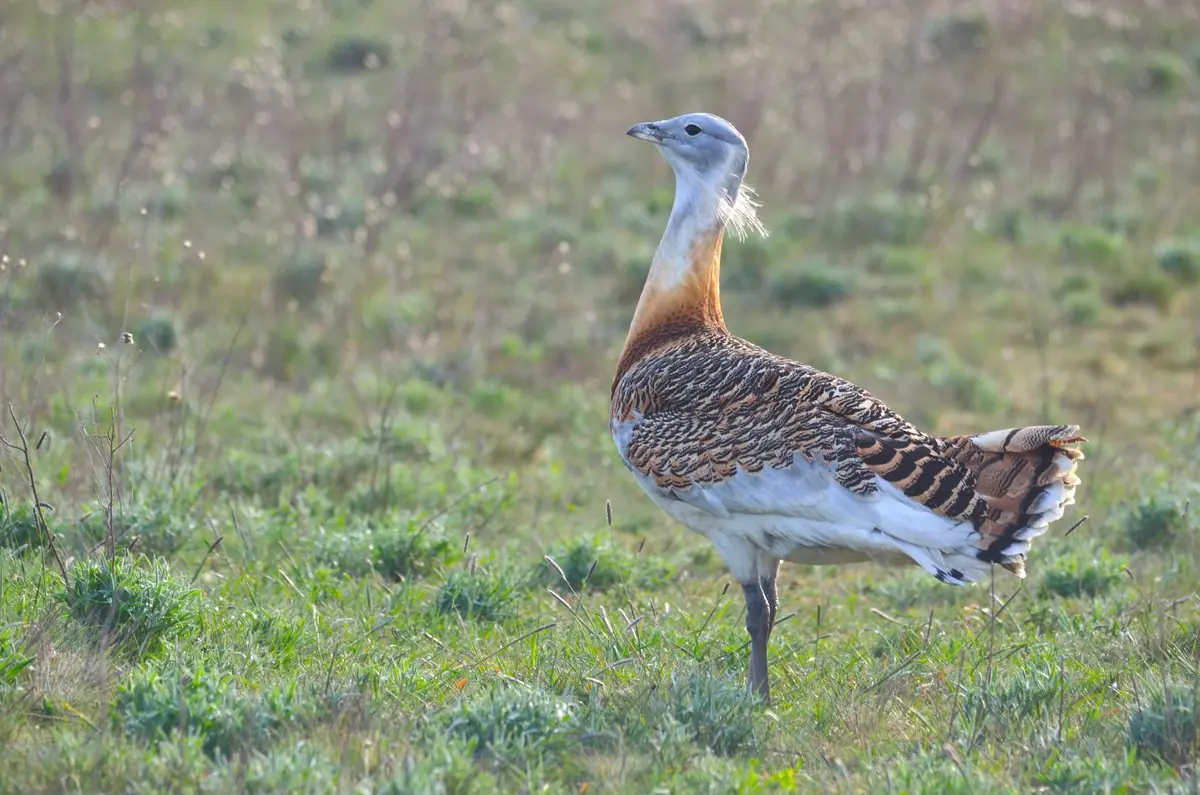
The largest spider in the country, a wolf spider species (Lycosa singoriensis), lives here. The grasslands are essential for the European ground squirrel (Spermophilus citellus) and the rare white polecat (Mustela eversmanni). Among water-related insects, dragonflies are worth highlighting. One of the largest insects in our country, the emperor dragonfly (Anax imperator), dominates its territory almost all summer, driving away competitors and enemies that threaten its food base. The rich fish fauna of the waters includes the weatherfish (Misgurnus fossilis), the Amur bitterling (Rhodeus sericeus) and the spined loach (Cobitis taenia). Unfortunately, however, the fauna of the waters is dominated by alien species such as the black bullhead catfish (Ameiurus melas) and the silver Prussian carp (Carassius auratus gibelio). Among the amphibians, the European fire-bellied toad (Bombina bombina) and the Danube crested newt (Triturus dobrogicus) are prominent. In the wooded habitats, the colourful roller (Coracias garrulus) nests in the holes of old trees and in artificial breeding holes, and a rare scarab, Protaetia speciosissima, lives in the canopy. The birdlife deserves special attention as the most important group in the area. So far, 263 species of birds have been documented, which is an outstanding number nationally. The Heves Grassland Steppes Protected Landscape Area, established in the Heves Plain in 1993, has as its primary objective the conservation of this valuable birdlife. Among the character species, the yellow wagtail (Motacilla flava) and the corn bunting (Miliaria calandra) are inhabitants of the grasslands. In bushes, the common whitethroat (Sylvia communis), the red-backed shrike (Lanius collurio) and the lesser grey shrike (Lanius minor) nest in the hedgerows and forest edges, where the lower shrub layer is home to one of the most beautiful bird songs in Europe in spring, when the nightingale (Luscinia megarhynchos) sings. Unfortunately, the great bustard (Otis tarda) has almost disappeared, and the population in the area has collapsed, although occasionally some specimens still appear. Birds of prey are a special feature of the landscape. While the populations of the imperial eagle (Aquila heliaca), the saker (Falco cherrug) and the red-footed falcon (Falco vespertinus) have been steadily increasing in recent years.