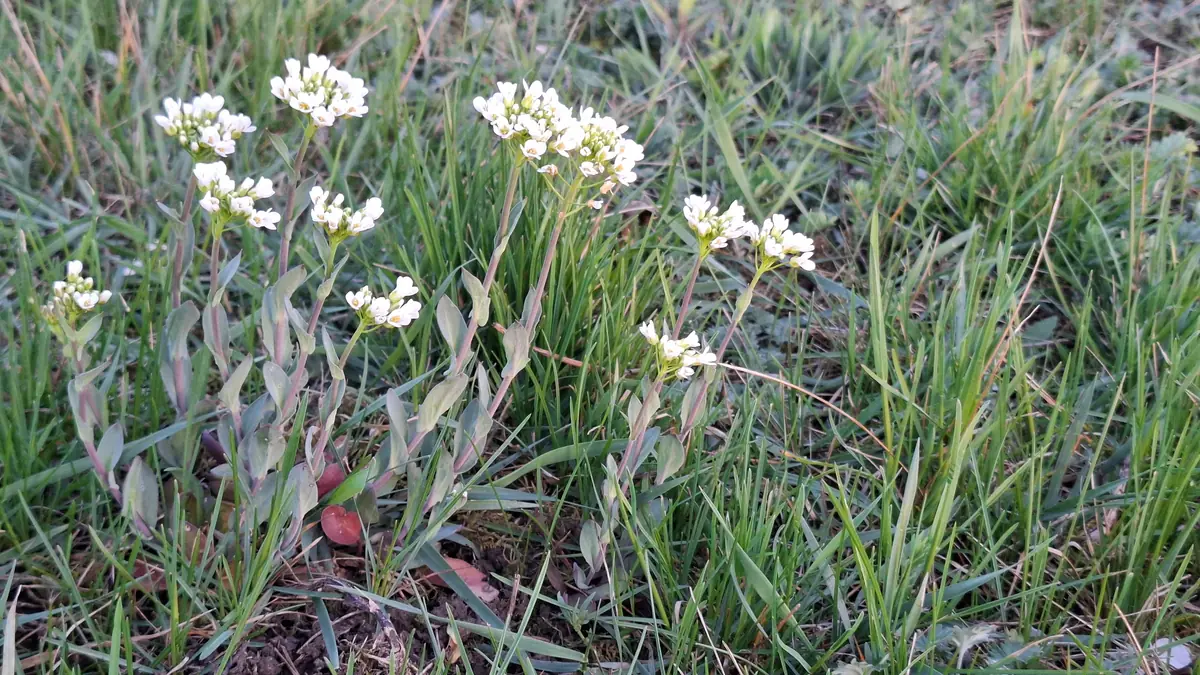
Survivor of Fragile Islands
On April 1, 2026, our association and staff from the Bükk National Park Directorate jointly surveyed the flowering population of the Slovak Penny-cress (Thlaspi jankae) at the two habitats in Szihalom: at least 8,840 individuals in the Szihalom cemetery area, and approximately 850 individuals in the Calvary Memorial Area.
The antitheses of the industrial revolutions—whose impact continues to this day—no longer even cross the mind of the average person as a fleeting thought once they leave school, so accustomed have we become to the progress that (seemingly) makes our daily lives more comfortable.
Agriculture, forestry, water management (and the list goes on) have changed dramatically. It suffices to compare 18th- and 19th-century maps with the landscape we see today: land use has undergone drastic changes. Certain sensitive or vulnerable species of wildlife could not tolerate this change.
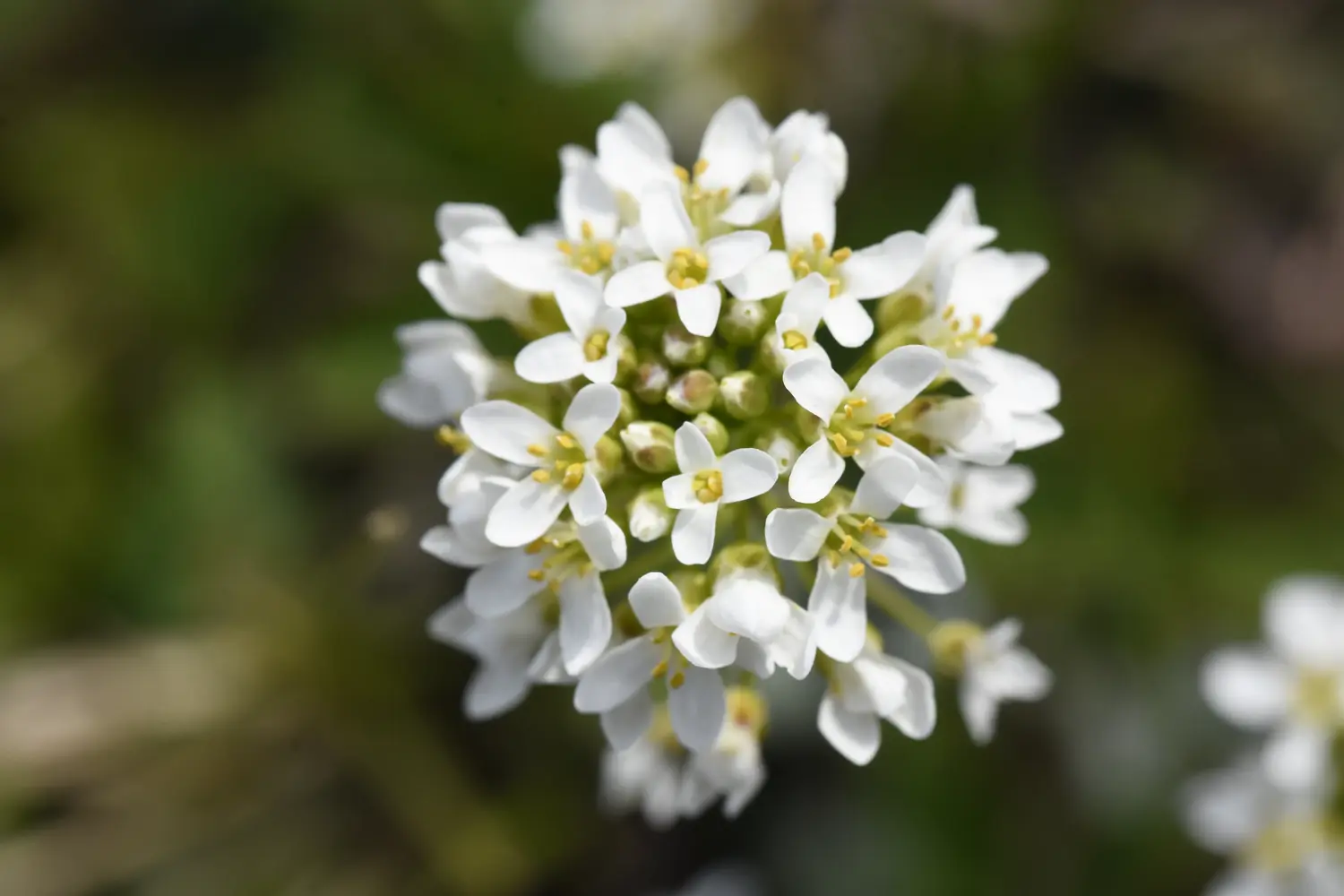
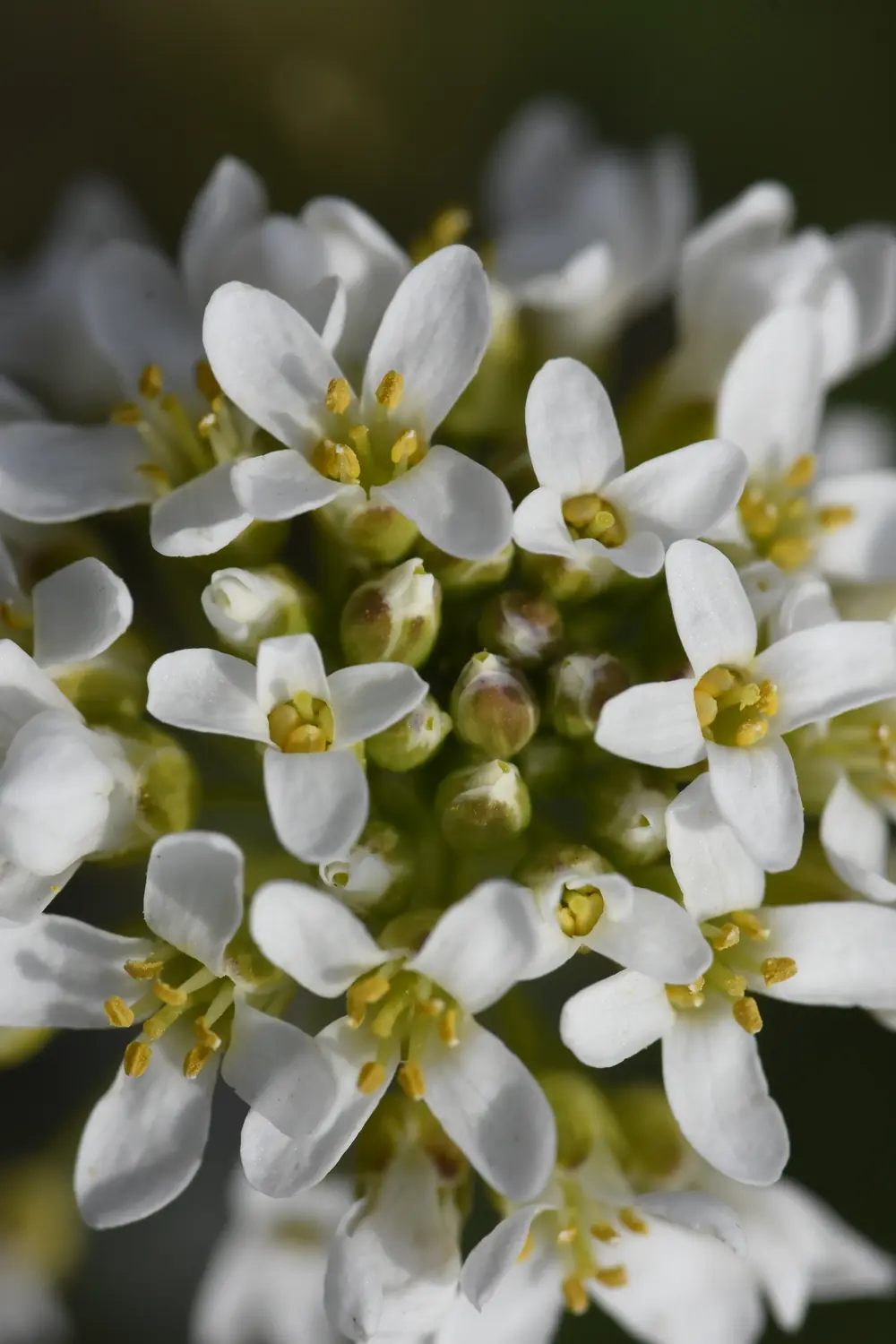
The village of Szihalom developed on the alluvial fans at the foot of the Bükk Mountains, bordering the northern edge of the Great Plain, in the immediate vicinity of the Eger Stream. The area has undergone significant transformation over the past centuries. Habitats disappeared, and new ones emerged, within which the composition of the flora and fauna changed in the blink of an eye. Upon closer inspection, the transformed landscape still reveals remnant areas that partially preserve elements from before the era of major transformations—such as the Szihalom public cemetery, which, among other things, serves as a refuge for the Slovak Penny-cress (Thlaspi jankae), a species of outstanding importance for nature conservation.
The protected Slovak Penny-cress, a Carpathian-Pannonian endemic species found only in the present-day territories of Slovakia and Hungary, can still be found in several locations in our region. Its population inhabits open, calcareous habitats (in mid-mountain, foothill, and lowland areas alike), but in this region it occurs primarily on severely degraded and fragmented loess grasslands, typically along streams flowing from the Bükk and Mátra Mountains. In these locations, we encounter only sporadic, isolated populations, which are consequently highly vulnerable.
In Hungary, the species blooms from late March through the end of April, though in some cases individual plants may persist until June. If you wish to admire the plants in full bloom, it is worth visiting on a sunny, warm day in early April. The continuous, dense field of flowers is a feast for the eyes.
In the Szihalom area, we have occurrence data for the species from a total of two such small areas where this magnificent-looking plant has managed to survive. These areas are the undeveloped sections of the public cemetery located in the heart of the village and the grassland area of the Clavary Memorial Area bordering Main Road 3 (Kossuth Lajos Street). The populations occurring in these two locations are greatly threatened by changes in the character of the area, mowing at the wrong time, and the appearance of invasive plants encroaching on new areas. The latter threat is posed by the paulownia (Paulownia tomentosa), which is currently spreading rapidly around the Calvary Chapel.
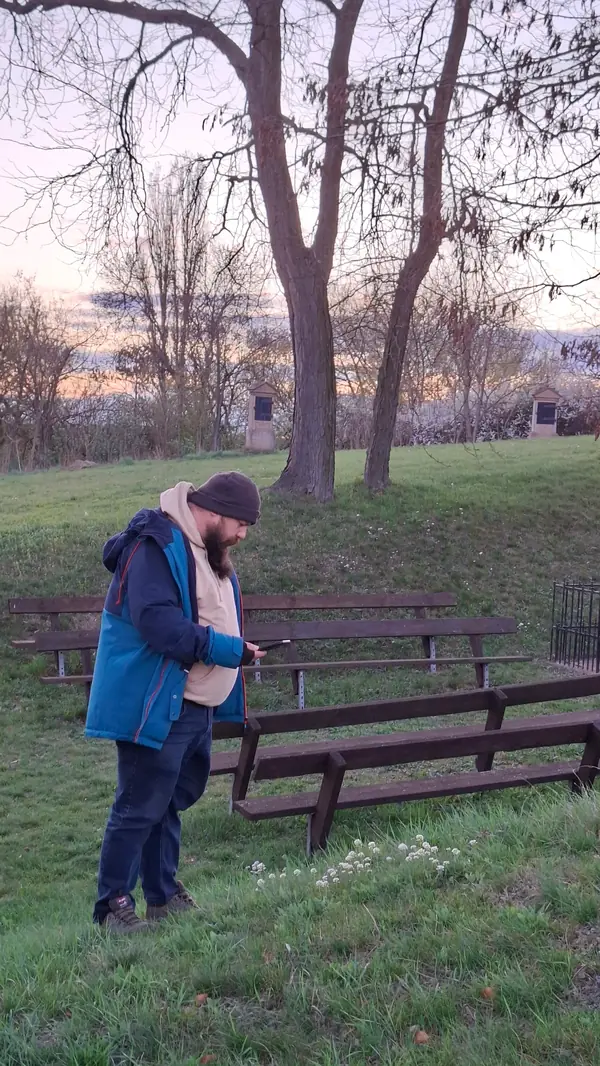
A feast for the eyes, but keep your hands to yourself! This is a protected species; collecting or damaging any individual plant or its parts is prohibited, and its habitat must also be preserved!
Protecting this species is unimaginable without the involvement of local civil society and municipal organisations, churches, land managers, and landowners. As a result of ill-considered land use planning or poor land management, the Slovak Penny-cress population in Szihalom could disappear within a few years.